
Shoulder pain / Frozen shoulder
Adhesive capsulitis · Pickering
Frozen shoulder treatment in Pickering.
Shoulder getting stiffer, more painful and harder to lift? Frozen shoulder (adhesive capsulitis) can feel like it will never end. We help you understand each stage, manage pain and get your movement back.
Prefer to talk? Call (289) 205-2930
Sound familiar?
Common signs of frozen shoulder.
- Deep, aching shoulder pain that builds gradually
- Pain that’s worse at night or when lying on it
- Steadily losing the ability to lift your arm
- Trouble reaching behind your back or doing up clothing
- Difficulty reaching overhead or out to the side
- Stiffness even when someone else moves your arm
- Sharp pain with sudden or quick movements
- Trouble with daily tasks like brushing hair or reaching a seatbelt
Frozen shoulder (adhesive capsulitis) happens when the capsule around the shoulder joint becomes inflamed, thickened and tight. It’s often confused with rotator cuff problems, so a proper assessment matters.
Get urgent care first if shoulder pain comes with chest pain, shortness of breath, fever, or follows a fall with obvious deformity.
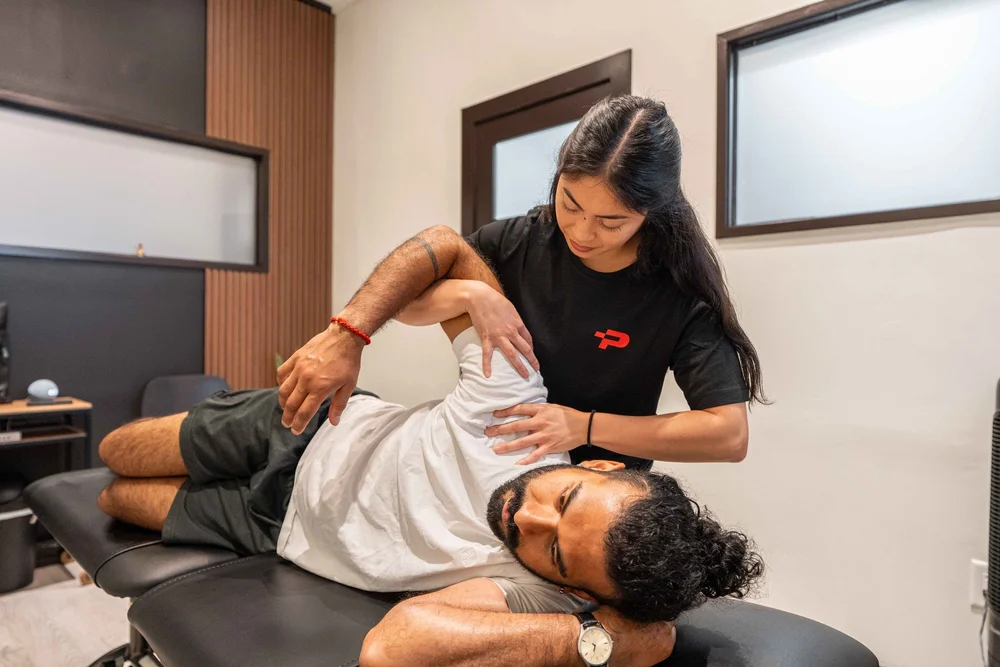
The frozen shoulder timeline
The 3 stages of frozen shoulder.
Freezing
Painful stagePain builds gradually and is often worse at night. Movement slowly becomes more limited.
Our focus: calm pain, keep gentle movement, education and sleep strategies.
Frozen
Stiff stagePain often eases, but the shoulder is at its stiffest, making overhead and behind-the-back movements difficult.
Our focus: mobility work, joint mobilization, strength and daily function.
Thawing
Recovery stageMovement gradually returns. The goal is to rebuild full range, strength and confidence in the shoulder.
Our focus: progressive strength, return to sport, lifting and overhead activity.
Timeframes are typical ranges and vary from person to person. Stages often overlap rather than switching suddenly.
Google reviews
Real patients. Real results.
“Sebastian was a huge help with the shoulder issues I was dealing with from bodybuilding. He took the time to understand what was causing the problem and worked with me to improve my mobility, range of motion, and overall shoulder function. I noticed a significant difference in both my training and how my shoulder felt day to day. He’s knowledgeable, professional, and understands the demands that come with serious weight training. I’d definitely recommend Sebastian to any athlete or bodybuilder dealing with mobility issues, pain, or limitations in their training.”
“Catherine is amazing! She really took the time to figure out exactly what my body needed to help with my recovery. She has had such a huge impact on how I feel in my day to day life and I can’t recommend her enough. The front desk staff is also lovely, they are kind and courteous. I always have the best experience at Plus Ultra, highly rexommend!”
“Easily the best clinic experience I’ve had. Vithu is an unreal RMT, super knowledgable and explains everything clearly and actually cares about your recovery.”
Causes & triggers
What causes frozen shoulder?
The exact cause isn’t fully understood, but research has identified clear risk factors. Sometimes it develops with no obvious trigger.
Age 40 to 60 & menopause
It’s most common in women aged 40 to 60, which overlaps with perimenopause and menopause. Falling estrogen may play a role.
Diabetes
People with diabetes have a much higher risk, and it can be more stubborn to treat.
Thyroid conditions
Both overactive and underactive thyroid conditions are linked with a higher risk.
Reduced arm movement
A period of not moving the arm, such as after a fracture, surgery, injury or illness, can trigger it.
Other health factors
It’s also associated with conditions like Dupuytren’s contracture, and with recovery after some heart or stroke events.
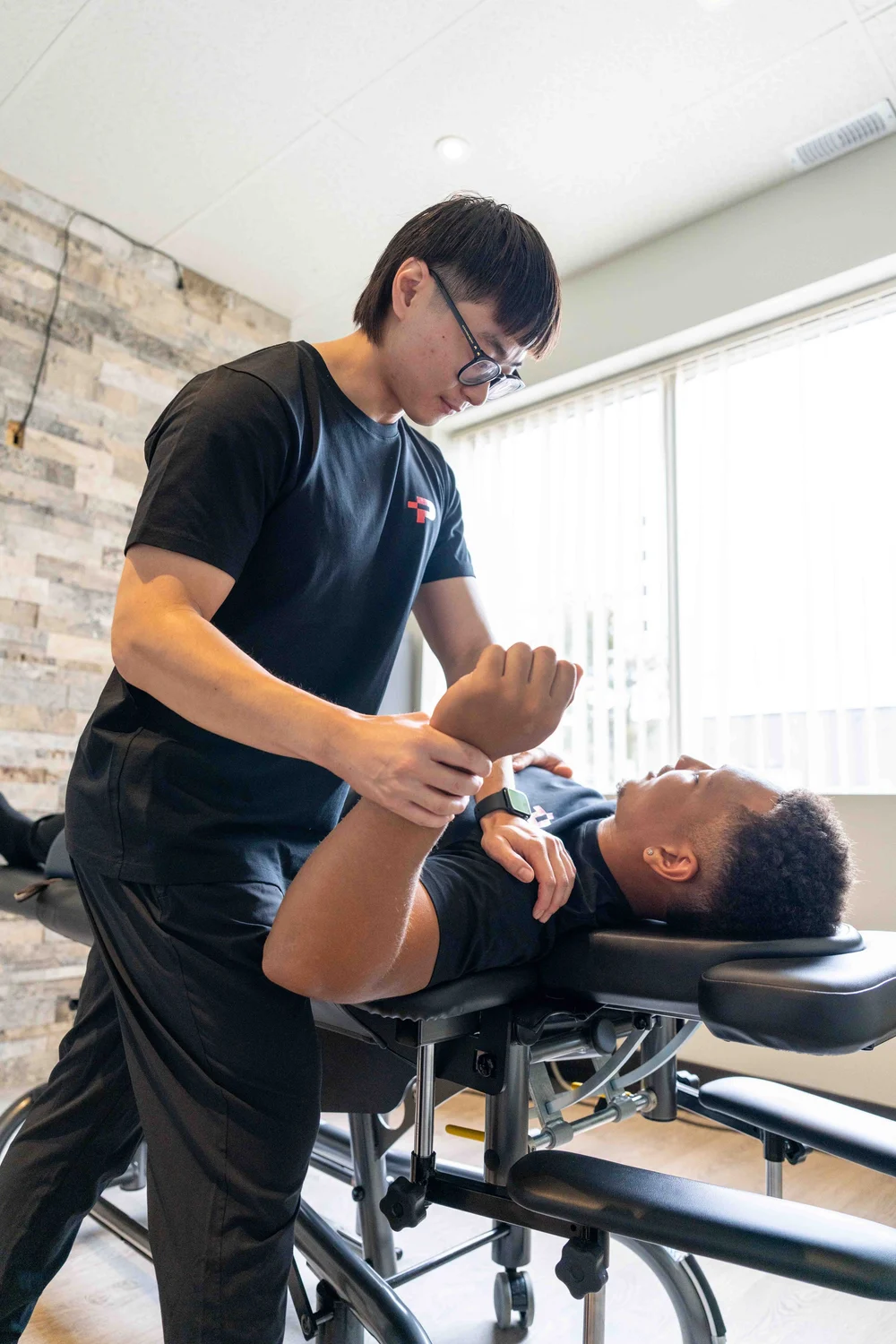
Is it frozen shoulder, or something else?
Frozen shoulder is often confused with rotator cuff problems, impingement or neck-related pain. Getting the right diagnosis early means the right treatment for your stage, and less guesswork.
How we help
Frozen shoulder treatment in Pickering.
Treatment is matched to your stage: gentle and pain-guided early on, then more active as pain settles and movement returns.
Physiotherapy
Stage-matched mobility and strength work, education and a home program to protect and restore movement.
Learn more →Chiropractic care
Joint mobilization and soft tissue techniques for the shoulder, neck and upper back, paired with exercise.
Learn more →Massage therapy
Ease muscle tension and guarding around the shoulder to improve comfort, especially combined with active rehab.
Learn more →Medical acupuncture
An option to help settle pain, especially during the painful freezing stage.
Athletic therapy
Return to lifting, sport and overhead activity once movement comes back.
Learn more →Working with your doctor
If an injection or further care may help, we’ll talk it through and coordinate with your physician.
Which appointment should I book?
We recommend starting with a physiotherapy or chiropractic assessment, so we can confirm whether it’s frozen shoulder and which stage you’re in. Massage therapy is a great add-on for comfort and muscle tension.
What to expect
From your first visit to your goals.
Frozen shoulder doesn’t follow a fixed schedule. Your care is guided by your stage and how your shoulder responds, not a set number of weeks.
Your first visit

Listen
Your story & goalsWhen it started, what makes it worse, and what you want to get back to.

Assess
Movement & strengthWe test how your shoulder, shoulder blade, neck and upper back move and function.

Treat & plan
Relief + next stepsHands-on care when appropriate, starter exercises, and a clear plan for your stage.
Your care, guided by your stage
Goal 1
Calm & protect
Settle pain, protect your movement and start a home program matched to your stage.
Goal 2
Improve movement
Build mobility and strength as your shoulder allows, so daily tasks get easier.
Goal 3
Reassess & plan ahead
Regularly review your progress and stage, adjust your plan, and move to less frequent check-ins as movement returns.
Your goals shape your care
Feel better, move comfortably
Better sleep and less pain are often the first wins, especially in the freezing stage.
Early stage focusGet back to what you love
Getting full range back for overhead reaching, lifting and sport takes time as the shoulder thaws.
Often several monthsGo further beyond
We shift into a coaching role, with periodic check-ins to keep you strong, moving well and performing at your best.
Ongoing check-insEveryone’s timeline is a little different.
Some people feel better sooner, and some need a little longer. Your clinician will explain your expected timeline at your first appointment and adjust your plan as you progress.
What can affect your timeline
Insurance
We direct bill your insurance.
- We submit the claim for you at your visit
- Pay only what your plan doesn’t cover
- Physiotherapy, chiropractic & massage therapy are commonly covered by extended health plans
Coverage depends on your plan. See the full list in the FAQ below.
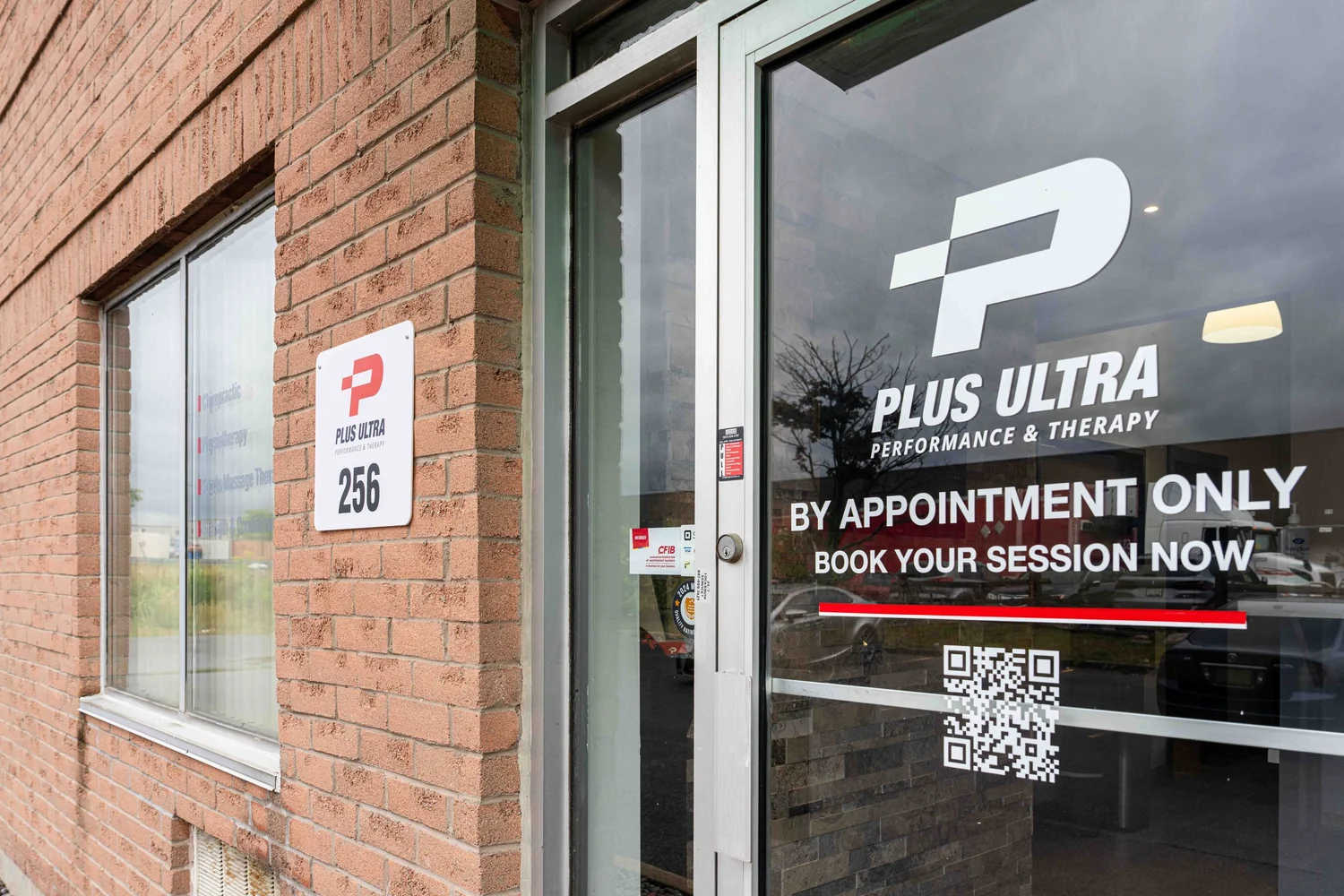
Visit us
Plus Ultra · Pickering
1885 Clements Rd E, Unit 256
Pickering, ON L1W 3V4 · Get directions →
Mon10–8Tue8–8Wed10–8Thu10–8Fri9–3Sat8–6SunClosed
Good to know
Frozen shoulder FAQ
What is frozen shoulder (adhesive capsulitis)?
How long does frozen shoulder last?
What causes frozen shoulder?
Is frozen shoulder linked to menopause?
Can physiotherapy or chiropractic care help frozen shoulder?
Should I keep moving my shoulder or rest it?
Do I need an injection or surgery?
Is it frozen shoulder or a rotator cuff problem?
Do I need a doctor’s referral?
Do you direct bill insurance?
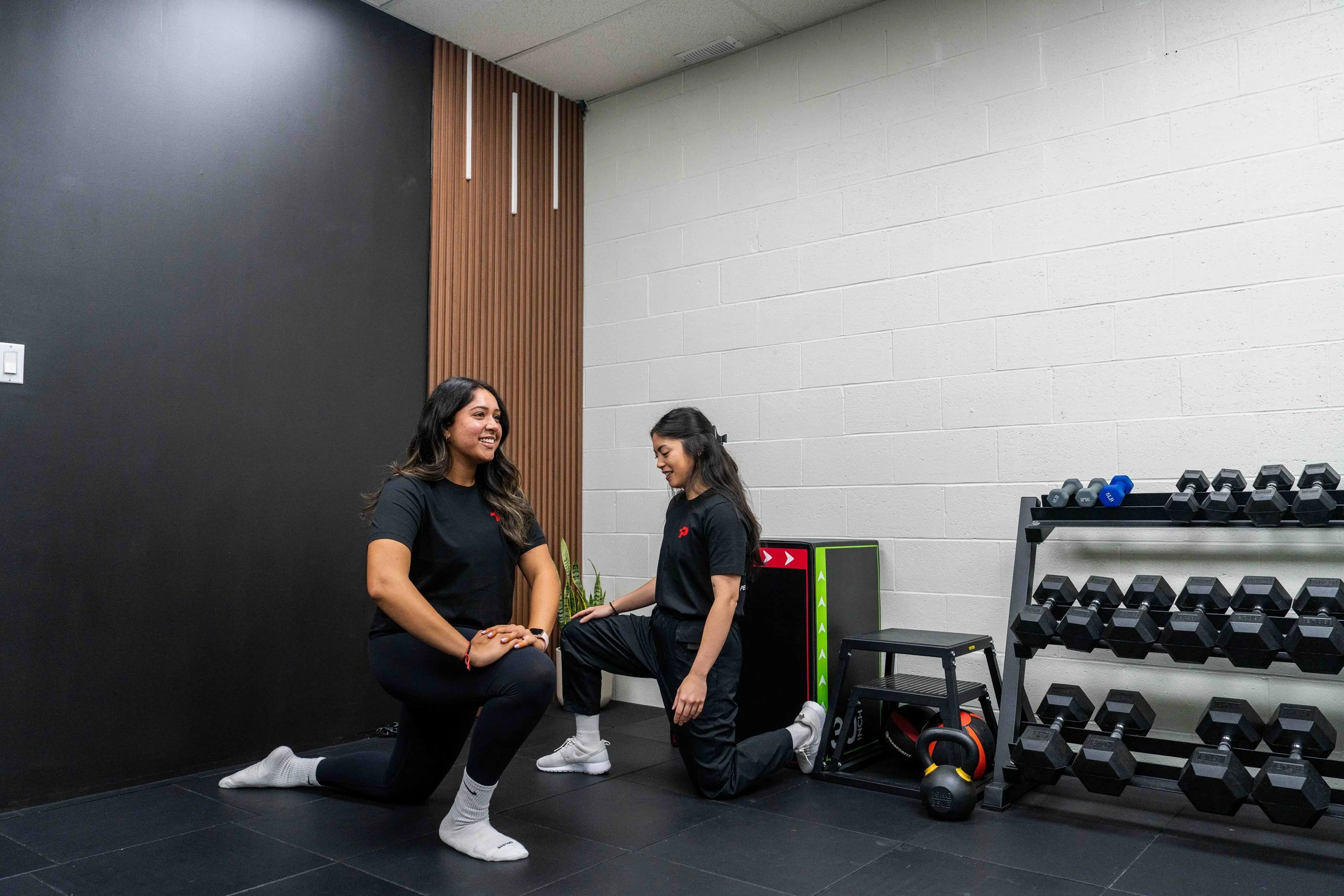
Plus Ultra Performance & Therapy
Don’t wait for it to thaw.
Book an assessment and leave with a clear plan, or call us at (289) 205-2930.